Rev. Stephen Wengam Urges Ministers and Church members to embrace Holiness as the True Measure of effective ministry
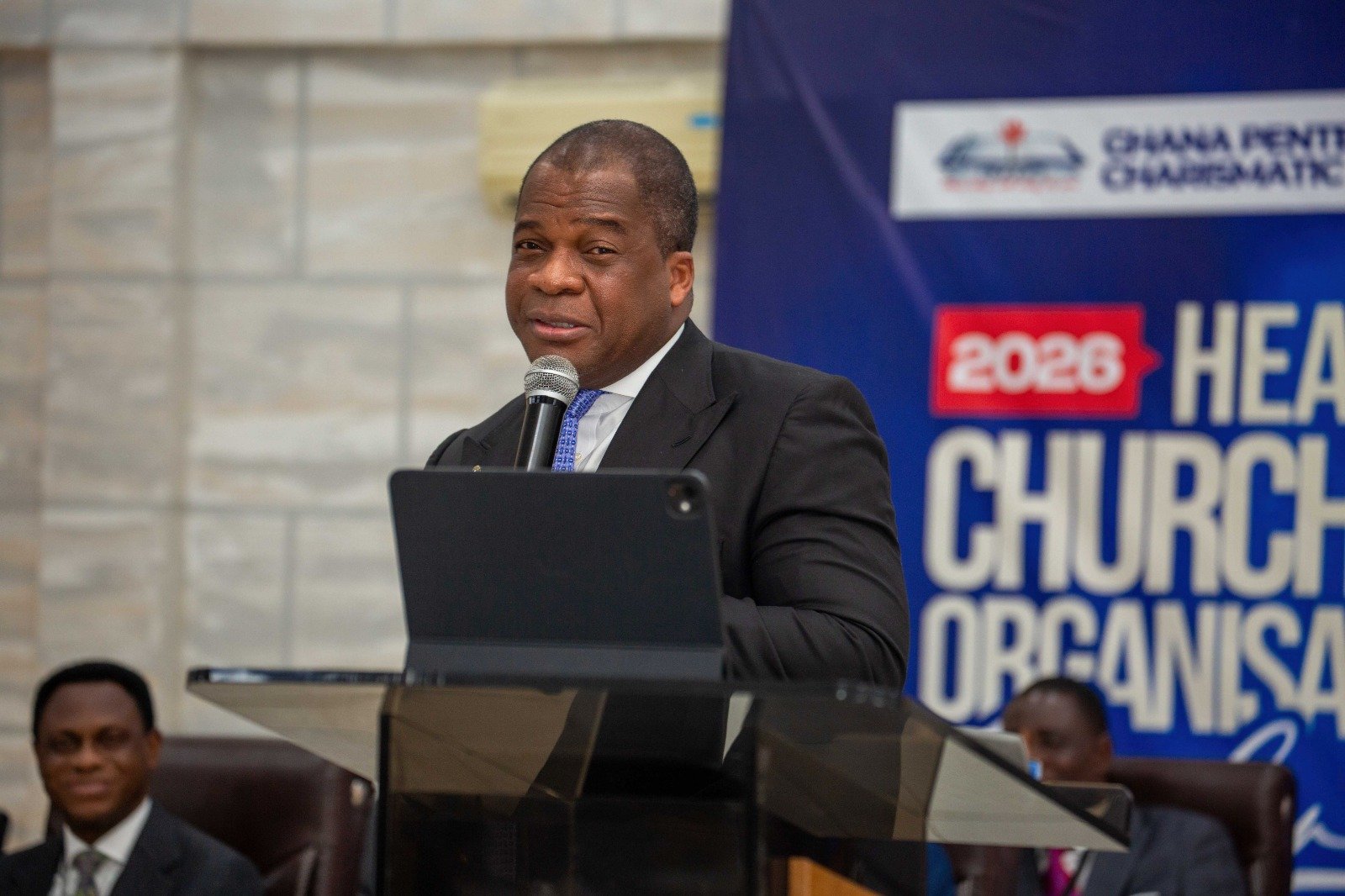
A Member of the National Executive Council of the Ghana Pentecostal and Charismatic Council (GPCC) and General Superintendent of the Assemblies of God, Ghana, Rev. Stephen Wengam, has urged Christians—particularly ministers of the gospel—to embrace holiness as the foundation of authentic Christian living and effective ministry.
Speaking on the subject of holiness at the 2026 Conference of Heads of Church and Organisations at the Pentecost Convention Centre (PCC) on 4th February 2026, Rev. Wengam emphasized that holiness is a Christian lifestyle, but not a one-time practice. He defined holiness as “the act and process of separating oneself from sin, uncleanness, carnality, and worldliness, and committing fully to God.”
Righteousness and Holiness
He distinguished between righteousness and holiness, explaining that while righteousness is imparted instantly at salvation through Christ, holiness requires daily commitment and dependence on God’s grace through sanctification. “When you are born again, you instantly become righteous because Christ imparts His righteousness to you,” he said. “But holiness is our responsibility as we cooperate with the grace of God on a daily basis.”
Rev. Wengam described holiness as the ultimate and umbrella attribute of God, under which all other divine attributes find expression. Referencing Isaiah 6, he explained that God’s holiness is infinite and overwhelming, which is why the angels could not cease proclaiming “Holy, holy, holy.” According to him, God’s infinity—His immeasurable nature in depth, height, and power—is fully revealed through His holiness.
Turning to ministerial life, Rev. Wengam warned that modern Christianity has elevated anointing, titles, and positions above holiness. He stressed that it was not Jesus’ anointing or title that threatened demons, but His holiness. “The demon said, ‘I know who you are—the Holy One of God,- Luke 4: 34’” he noted. “Your holiness is your greatest asset. It is what gives you authority, not the oil poured on your head or the office you occupy.”
He lamented the growing culture where public reverence for ministers focuses on external honor rather than inward character. “I would rather prefer someone pray for me to receive more grace to be holy than kneel publicly asking for miracles,” he said. According to him, holiness, not charisma, it is what commands spiritual authority and respect in both the spiritual and human realms.
Rev. Wengam further emphasized that holiness cannot be faked or pretended. “Demons know the depth of our holiness,” he warned, referencing the sons of Sceva as an example of spiritual pretence without genuine holiness. He challenged ministers to ask themselves whether the spiritual realm recognizes them as holy, just as it recognized Christ.
He explained that true holiness is often proclaimed by third parties, not self-acclamation. Using Mark 1:24 as an example, he noted that Jesus did not declare Himself holy; it was a demon that testified to His holiness. “Your holiness must be observable and impactful,” he said. He added that his desire would be to be remembered as a holy man of God, but not by request.
Accountability
Addressing accountability, Rev. Wengam cautioned against abuse of power in ministry. He cited the farewell address of Samuel in 1 Samuel 12, where the prophet openly subjected his life and leadership to public scrutiny. According to him, holy leaders willingly submit to accountability structures and self-examination. “You cannot be holy and dishonest. You cannot holiness and same time dishonest,” he said.
He encouraged church leaders to embrace transparency, proper financial accountability, and ethical leadership, noting that congregants are discerning and cannot be deceived indefinitely. “The church does not belong to the church leaders alone,” he stressed. “Leaders must structure the local church to ensure accountability—it will help both the church and the leader.”
Quoting Hebrews 12:14, Rev. Wengam reminded believers to pursue peace with all people and holiness, without which no one will see the Lord. He warned that peace, relationships, influence, and popularity must never be pursued at the expense of holiness.
In conclusion, Rev. Wengam called on Christians and ministers alike to return to a life of holiness, faithfulness, and integrity, emphasizing that holiness brings glory to God, credibility to ministry, and lasting impact on society.
SOURCE: GPCC NEWS
Was this article helpful?

GPCC
AdminStay up to date with what's happening at GPCC
Related post:
- Celebrating Ghanaian Women’s Impact After 69 Years of Independence
- “No bed syndrome” and the right to quality health care
- Road Safety Advocate Urges Church Leaders to Use the Pulpit to Promote Safe Driving
- Rev. Dr. Edward K. Tumsiah Urges Christian Leaders to Guard Their Words, Actions and Spiritual Life
- City of Faith Assemblies of God Pastor Calls for purpose -Driven Leadership to advance Ghana’s development
- Go Deeper to Reflect Christ- GPCC President urged Christian Leaders
- GPCC Upper East Regional Secretary Cautioned Youth Against Negative Foreign Influences
- GPCC Treasurer Calls on Churches to Equip Youth with Employable Skills Amid Unemployment Challenges
- GPCC President Urges the Church to Remain morally upright and politically Neutral.
- GPCC Holds 2026 Conference of Heads of Churches and Organisations, Calls Leaders to Reflect Christ